How to Research an Old Leeds Market, Café or Food Shop
Use Leodis photographs, trade directories, maps and newspaper archives to investigate a Leeds food address, check dates and prepare questions about image reuse.
Published
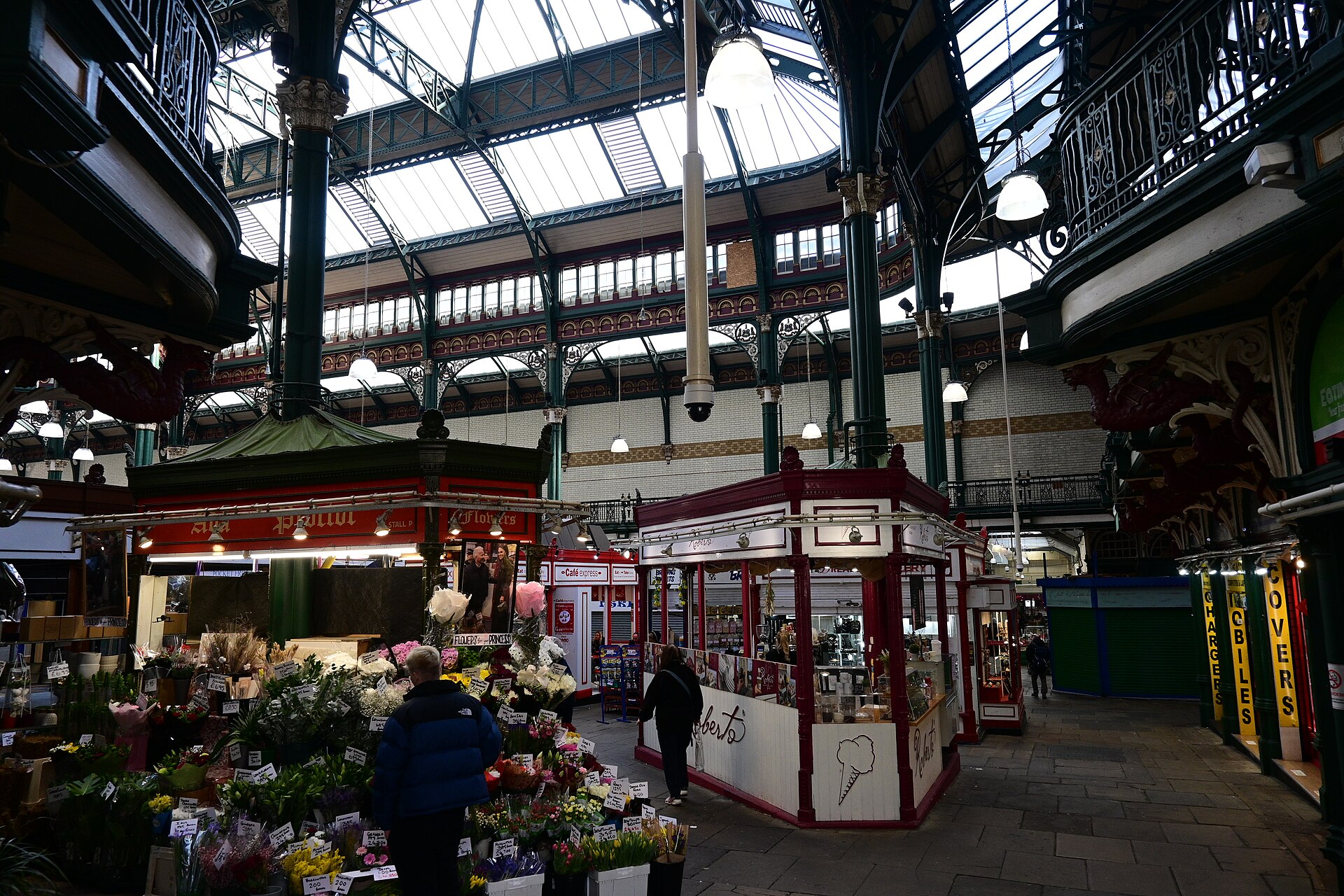

Researching Leeds food history starts with a specific question: who traded at an address, what a shop sold, or when a café changed its name. Leeds Libraries’ Local and Family History collection includes directories, maps, photographs and newspaper archives. Together with Leodis, the photographic archive managed by its Local and Family History team, these resources give you several ways to investigate the same premises.[1][2]
Start With an Address and a Manageable Question
Choose one premises or a short stretch of a market street. Write down the business name you know, its address and the period you want to investigate. Keep alternative spellings and remembered names alongside them as search possibilities. Treat a family recollection as a lead to check, and keep it separate from information you find in a dated record.[1]
The library’s mix of directories, maps and photographs supports different questions. For a former grocer, you might compare a directory entry with a photograph of the frontage. For a market business, start by establishing the location you mean before connecting records that share a trader’s name. Matching names alone leaves room for mistakes.[1]
Use Leodis to Examine the Street
Leodis is a useful photographic starting point. Leeds City Council describes it as an online archive of Leeds images, old and new, managed by the Local and Family History team at Leeds Libraries. Search for the street as well as the business. A wider street view may be worth inspecting even when the café or shop isn’t the photograph’s main subject.[1][2]
When an image looks relevant, note its reference and transcribe any visible shop name carefully. Examine neighbouring premises, signs and the position of entrances. Record what you can actually read separately from what the accompanying description says. If lettering is unclear, leave a gap in your transcription rather than completing a familiar business name from memory.[1][2]
Give Each Date a Specific Meaning
Keep a separate note for the photograph’s stated date, a directory’s publication year and a newspaper issue’s date. When checking a photographic record, distinguish any date assigned to the image from dates mentioned in its description. Preserve wording such as “circa” or an estimated range wherever it appears.[1][2]
A dated photograph showing a legible café sign can support a carefully bounded observation about that image. It cannot, by itself, establish the café’s opening day. Likewise, finding a business in one directory gives you a dated reference to investigate. To claim an opening, closure or change of ownership, look for evidence addressing that particular event.[1]
Choose the Record That Answers Your Question
Leeds Libraries lists several kinds of local-history material. Use them to test a particular point rather than collecting everything that mentions the same street.[1]
| Record | What to Investigate | What to Check Before Writing |
|---|---|---|
| Photograph | Frontage, visible business names and neighbouring premises | Whether the detail is legible and how the image is dated |
| Directory | A named trader or business at an address | The publication year and the exact wording of the entry |
| Map | The position of premises within a street or market area | The map’s date and whether the address can be matched |
| Newspaper | Advertisements, notices or reporting about the business | The issue date and whether the item is an advert or editorial reporting |
For newspaper research, the library lists British Library Newspapers, Newsbank and the British Newspaper Archive as distinct resources. Its descriptions identify nineteenth-century coverage in British Library Newspapers and both current and historic copies in Newsbank, including the Yorkshire Post and Yorkshire Evening Post. Choose according to the period and publication you need, then check the resource’s access instructions before planning your search.[1]
Ask About Image Reuse Before Publishing
Keep image research and publication decisions separate. Before reproducing a photograph, ask about the specific image’s reuse terms, any permission required and the requested credit. Supply its reference and explain whether you intend to use it online, in print or both. Don’t treat an image’s presence in an online archive as permission to publish it.[1][2]
Save the response with your notes. If the reuse position remains unresolved, continue checking the history through the other records and leave the photograph out of your publication until you have an answer.[1][2]
Prepare a Focused Library Enquiry
The Heritage and Research library is on the second floor of Leeds City Library. Leeds Libraries warns that essential maintenance affects some research material, particularly parts of its Special Collections and historic periodicals, and recommends contacting the department before visiting. Ask about the particular directory, newspaper run or collection you need.[1]
Send a short enquiry containing the address, business name, approximate period and references you’ve already found. Make the unresolved question explicit, such as whether a directory covers a particular year. Keep that question in your notes if the answer remains uncertain. Your next useful discovery may be the record that narrows a date range.[1]
Sources and checks
These sources were used for this article. Availability, prices and service details can change after the stated check date.
- Heritage and research | Leeds Library
Checked 20 October 2026.
The Heritage and Research library is on the second floor of Leeds City Library. The Local and Family History collection includes directories, maps, photographs and newspaper archives. Leeds Libraries identifies Leodis as a photographic archive. British Library Newspapers covers nineteenth-century newspapers. Newsbank includes current and historic newspapers, including the Yorkshire Post and Yorkshire Evening Post. British Newspaper Archive is listed as a separate research resource. The library warns of maintenance-related restrictions affecting some research materials and recommends contacting it before visiting. The listed record types underpin the article’s suggested research and evidence-checking methods, rather than findings about any particular food business.
- Leeds 400 - a year of celebration | Leeds.gov.uk
Checked 20 October 2026.
Leodis is an online photographic archive containing images of Leeds, old and new. The Local and Family History team at Leeds Libraries manages Leodis. Leodis provides the photographic resource used in the article’s recommendations for inspecting street images, recording dates and asking image-specific reuse questions.